Uniting disciplines to protect and promote the health of all life on Earth.
The One Health approach recognizes that the health of humans, animals, plants, and the environment are inextricably linked, with the health of one affecting the health of all. Issues must be addressed cohesively instead of independently.
This convergence approach is essential considering that approximately 70% of emerging infectious disease cases in humans and livestock are a consequence of spillover events from wildlife. Similarly, humans play a role in animal disease emergence by facilitating global transfer of infectious agents, altering landscape conditions, and adding environmental disturbances. Losses due to plant diseases can reduce global agricultural productivity by up to 40% for the five major food crops, thus undermining our ability to safeguard national and global food security. In response, state, national, and international governmental agencies have initiated programs directed at developing One Health solutions to address the rapidly emerging national and global health challenges that we face.
The UT One Health Initiative is a system-wide network of faculty and students seeking to address complex health issues around the globe through interdisciplinary collaboration. We promote One Health at UT and beyond through research, outreach, and education—check out some of our programs below, and join our mailing list to stay in the loop!
Global Network


Upcoming Event
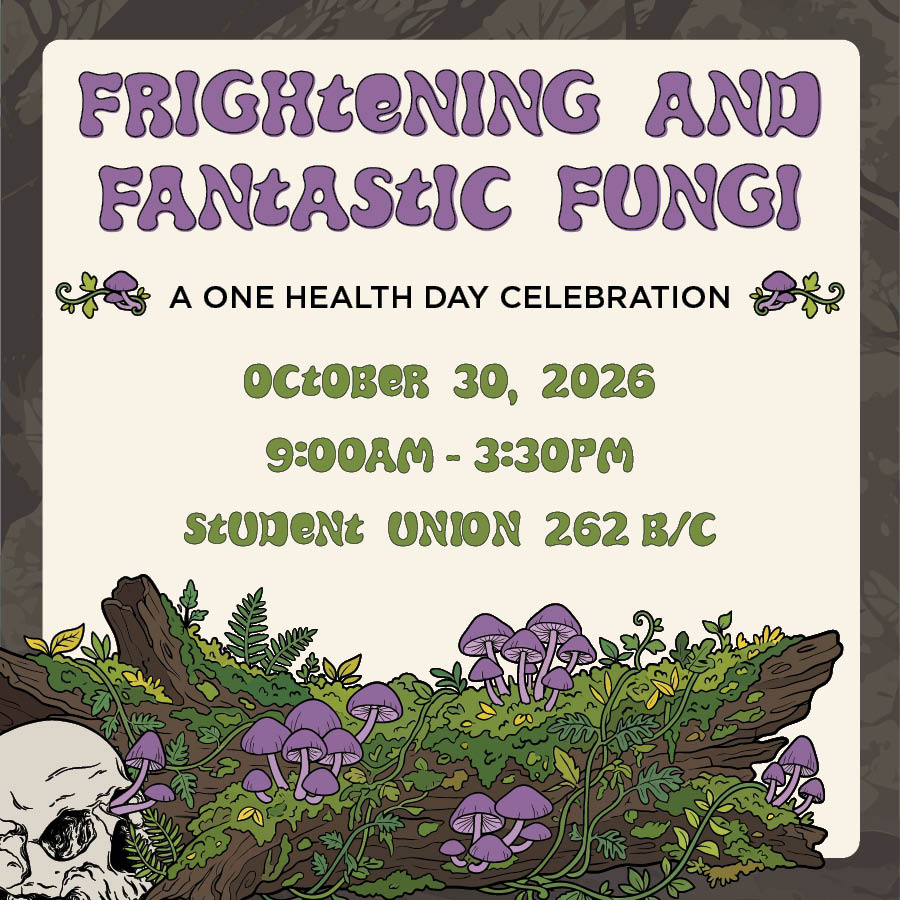
Join us on October 30 at the Student Union to learn about the complex impacts of fungi on the health of humans, animals, plants, and the environment. You’ll also learn about the mushrooms of Appalachia and the many roles fungi play in culinary arts. Refreshments will be provided, and Halloween costumes are encouraged!
The event begins at 9am and wraps up at 3:30pm; refreshments will be served at noon. Attendees are welcome to stay all day or drop in! Check out the schedule at onehealth.tennessee.edu/fungi.
Free and open to all; RSVP in advance to reserve a goody bag.
Quick Links